

Underwater Pipeline Installation and Repair Professional Diving and Technical Operations
From seawater intake pipelines and deep-sea outfall systems to offshore pipelines and industrial facility infrastructure, we examine the installation, maintenance, repair, inspection and technical control processes of underwater pipeline systems.
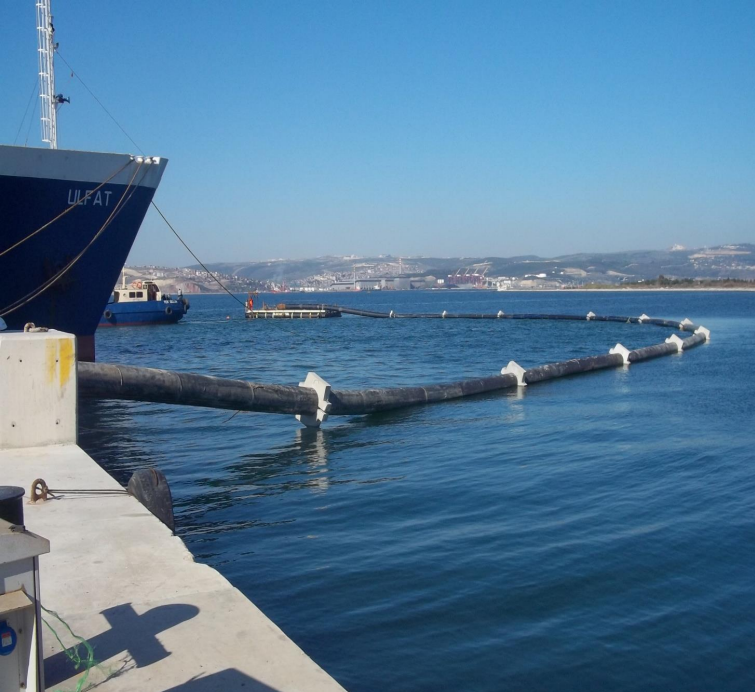
Underwater pipelines play a critical role in oil and gas transportation, seawater intake systems, cooling water lines, marine outfall systems, firewater networks, potable water transmission and industrial infrastructure. Safe installation and operation of these systems require experienced commercial diving teams, appropriate engineering planning and professional field execution.
Underwater Pipeline Installation and Technical Operations
Pirana Diving provides professional commercial diving and underwater technical services for pipeline projects carried out at ports, power plants, refineries, shipyards and offshore facilities.
From route inspection and subsea positioning to flange connections and stabilisation works, different stages of the operation are supported by commercial diving teams and, where required, ROV systems.
Depending on project requirements, HDPE, steel, GRP/CTP, ductile iron and PE100 pipelines may be used. Installation methods are selected according to site conditions and engineering requirements.
Where Are Underwater Pipelines Used?
Subsea pipeline systems are used for various purposes in energy, industrial, port infrastructure and water management projects.
Seawater Intake Pipelines
Supply high-volume seawater to cooling systems at thermal power plants, refineries and major industrial facilities.
Marine Outfall Pipelines
Infrastructure systems designed to convey treated industrial or municipal wastewater to designated marine discharge locations.
Offshore Oil and Gas Pipelines
Used to transport hydrocarbons between offshore production areas, terminals and other associated facilities.
Firewater Pipelines
Supply seawater to firefighting systems at ports, LNG terminals, refineries and petrochemical facilities.
Potable and Utility Water Pipelines
Subsea transmission lines used to supply clean water to islands, coastal settlements and tourism facilities.
How Is an Underwater Pipeline Installed?
Successful underwater pipeline installation begins with a planned engineering process in which seabed conditions and existing infrastructure are accurately assessed.
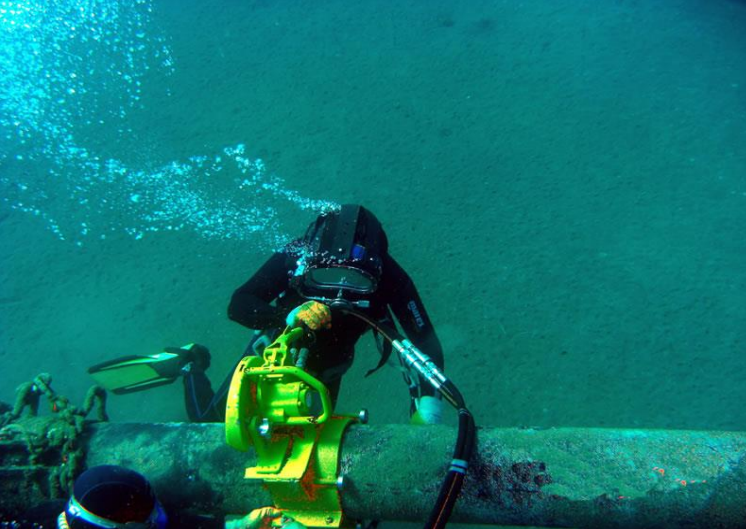
Following the preliminary survey, the pipeline is prepared according to project requirements and lowered into the water using the selected installation method. Diving teams monitor pipeline alignment, route, connection points and stabilisation operations throughout the project.
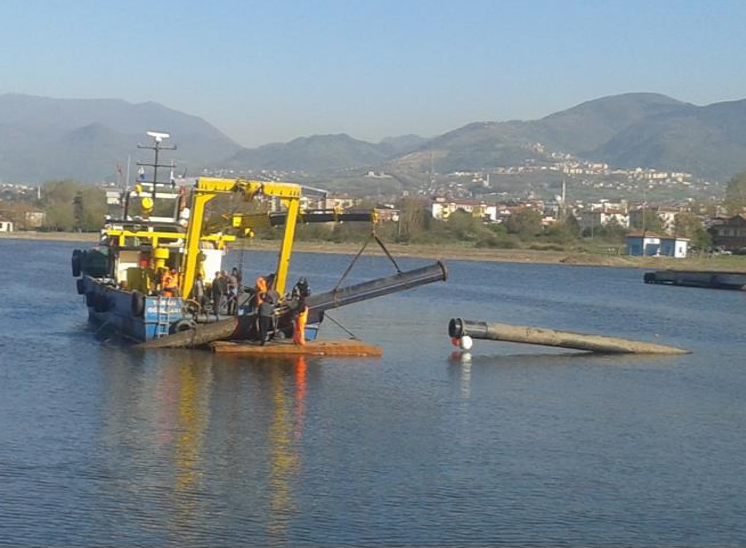
The selection between Float & Sink, crane-assisted lowering, S-Lay, Bottom Pull or Tow methods depends on the pipeline type, length, water depth and site conditions.
Key Stages of Underwater Pipeline Installation
Preliminary Survey and Site Assessment
Site conditions and existing infrastructure are assessed to determine the appropriate pipeline route.
Pipeline Preparation
The appropriate pipe material is selected according to project requirements. Welding, flange installation, coating and quality controls are completed onshore before preparation for launching.
Subsea Placement
The prepared pipeline is carefully positioned on the seabed according to the selected installation method.
Flange and Connection Operations
Diving teams complete the required mechanical connections and verify the correct positioning of pipeline components.
Support and Stabilisation
Appropriate support and stabilisation measures are applied to maintain the pipeline's subsea position and long-term mechanical stability.
Underwater Pipeline Support and Stabilisation
Depending on seabed conditions and hydrodynamic forces, different stabilisation systems may be used to restrict pipeline movement and improve long-term mechanical integrity.
Underwater Pipeline Damage Assessment and Repair
Underwater pipelines may develop corrosion, mechanical damage, anchor and chain impact damage, seabed movement, flange leakage or coating deformation over time due to the marine environment.
Commercial diving teams and, where required, ROV systems are used to determine the location and condition of the damaged section. The intervention method is planned according to the pipeline material and the nature of the damage.
Where a damaged pipeline section must be replaced, underwater hydraulic cutting equipment may be used and a new spool piece or appropriate connection component can be installed.
Common Types of Underwater Pipeline Damage
Corrosion
Material deterioration that may affect metallic pipelines and connection components in the marine environment.
Mechanical Damage
Pipeline deformation caused by impact, pressure or other external mechanical forces.
Anchor and Chain Damage
Damage caused by contact with anchors or chains during vessel operations.
Seabed Movement
Changes in seabed conditions that may affect pipeline supports, alignment or route stability.
Flange Leakage
Sealing problems occurring at flanges, gaskets or other connection points.
Coating Deformation
Physical or mechanical deterioration affecting the external protective coating of the pipeline.
Underwater Pipeline Repair Methods
Flange Replacement
The damaged flange is removed and a new project-specific flange and connection components are installed.
Repair Clamp Installation
Mechanical repair clamps may provide an effective intervention for localised leaks or limited pipeline damage.
Pipeline Section Replacement
The damaged section is removed using suitable underwater equipment and replaced with a new pipe or spool piece.
Underwater Welding and Cutting
Appropriate underwater welding and cutting techniques may be used according to the technical requirements of the project.
Cathodic Protection Inspection
The condition of sacrificial anodes is inspected and anodes may be replaced where required.
ROV and CCTV Inspection
Pipeline routes, connections and damaged sections can be inspected using underwater cameras and ROV systems.
Equipment Used in Underwater Pipeline Operations
Pipeline Quality Control Process
Following installation or repair, pipeline connections and completed works are inspected and the required technical records are prepared in accordance with the project scope.
Do you have a pipeline installation, maintenance or repair project?
Contact the Pirana Diving team for technical information about underwater pipeline installation, deep-sea outfall pipelines, seawater intake systems, pipeline repair, ROV inspection and underwater survey operations.