

International Ship Salvage Marine Salvage Operations
Professional underwater survey, wreck removal, fuel transfer and technical salvage operations designed to manage risks to vessels, cargo and the marine environment following grounding, sinking, collision, fire and other marine casualties.
Grounding, collision, fire, machinery failure, sinking and other marine casualties can create significant risks to vessels, cargo, personnel and the marine environment. Marine salvage operations are highly specialised technical operations carried out to secure vessels or wrecks, reduce environmental risks and manage the recovery process in a controlled and professional manner.
What Is Marine Salvage?
Marine salvage refers to the technical operations carried out to secure, refloat, lift, recover or relocate a vessel, wreck, cargo or marine structure that is in distress or poses an operational risk.
International ship salvage operations may involve the coordinated work of commercial divers, marine engineers, salvage tugs, ROV systems, cranes and heavy lifting equipment.
Depending on the scope of the operation, salvage planning may involve not only recovery of the vessel or wreck but also control of fuel leakage, protection of the marine environment and reduction of economic losses.
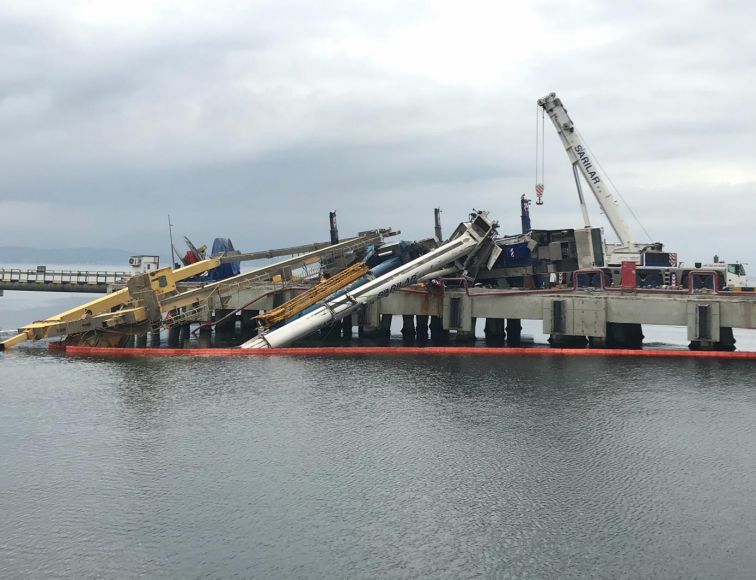
Key Stages of a Marine Salvage Operation
Every salvage operation is assessed individually according to the nature of the casualty, condition of the vessel, environmental risks and site conditions.
Emergency Assessment
The initial stage focuses on the vessel's current condition and the primary risks that may affect the salvage operation.
Underwater Survey and Damage Assessment
Professional commercial divers and, where required, ROV systems are used to inspect the submerged sections of the vessel in detail.
Technical Salvage Planning
Survey data is evaluated to determine the appropriate salvage methodology and sequence of operations.
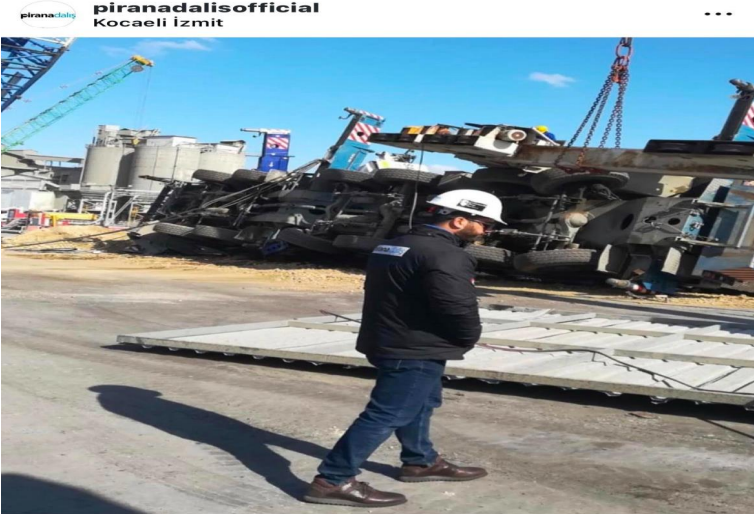
Accurate Survey Is the Foundation of an Effective Salvage Plan
Understanding the actual underwater condition of a damaged or sunken vessel is critical to developing an effective and safe salvage plan.
Close visual inspections performed by commercial divers can be supported by HD video recordings, technical measurements, underwater NDT applications and ROV footage.
Hull openings, deformation, damage, propeller and rudder condition, the vessel's position on the seabed and suitable attachment points for lifting equipment are technically assessed.
Methods Used in Marine Salvage Operations
Refloating Grounded Vessels
Vessel weight, ballast condition, water level and towing forces are evaluated together when planning a controlled refloating operation.
- Cargo lightening operations
- Ballast optimisation
- Tidal planning
- Tug assistance
- Controlled towing operations
Sunken Vessel Recovery and Wreck Removal
Depending on the location and structural condition of the wreck, it may be recovered as a complete unit or divided into controlled sections for removal.
- Underwater wreck survey
- Underwater lifting bags
- Crane-assisted lifting
- Pontoon systems
- Underwater cutting and wreck removal
Fuel Removal Operations
Controlled fuel transfer operations may be carried out on damaged or sunken vessels to reduce potential environmental risks.
- Hot Tapping operations
- Ex-proof pumps
- Temporary transfer lines
- Oil containment booms
- Leak control systems
Role of Commercial Divers in Marine Salvage Operations
Commercial diving teams perform critical underwater tasks throughout salvage operations and provide the surface team with real-time information from the work site.
Underwater Cutting and Wreck Removal Operations
In some wreck removal projects, recovering the wreck as a single unit may not be technically or operationally feasible. In these cases, controlled underwater cutting methods may be applied.
Commercial diving teams work at predetermined cutting points in accordance with the salvage engineering plan, allowing the wreck to be divided into sections suitable for lifting and removal.
Safe rigging of the separated sections, installation of lifting equipment and preparation for crane or pontoon lifting operations are also important parts of the recovery process.
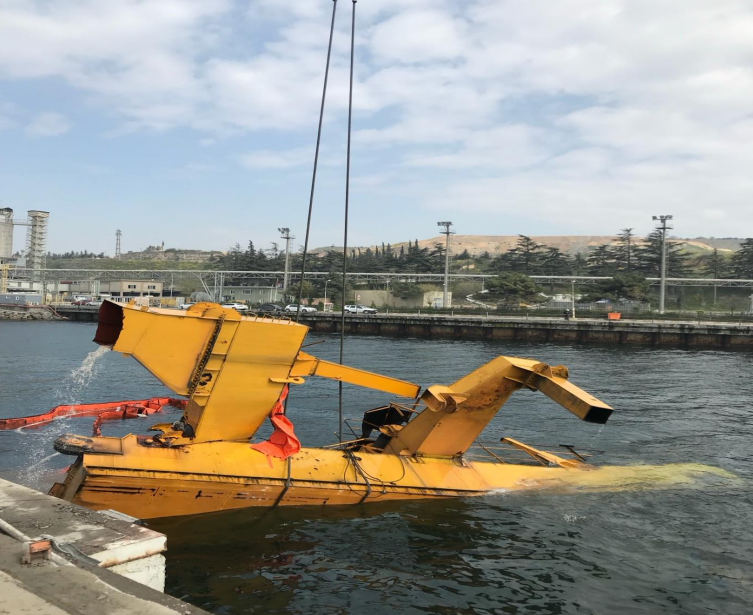
Equipment Used in Marine Salvage Operations
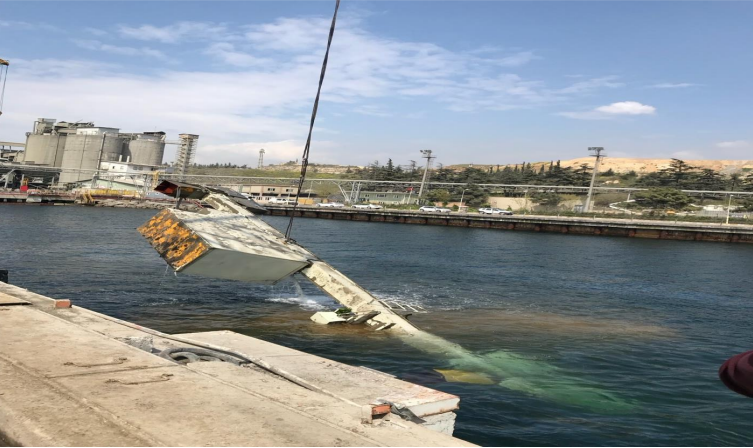
Protecting the Marine Environment During Ship Salvage Operations
In modern salvage operations, protection of the marine environment is considered alongside the recovery of the vessel or wreck as a fundamental element of operational planning.
Potential leakage from damaged fuel tanks, pipelines and other systems can be assessed, and controlled fuel removal and pollution prevention systems may be used where required.
Environmental measures are planned according to the nature of the casualty, cargo, fuel quantity and local environmental conditions.
Controlling Pollution Risks
Appropriate environmental response systems may be used to control oil and fuel leakage that can occur during salvage operations.
Standards and Regulations in Marine Salvage Operations
Depending on the nature of the project, vessel condition, contractual structure and operational location, various international conventions, contractual frameworks and technical guidance may be considered during salvage planning.
Our Ship Salvage and Marine Salvage Services
Pirana Diving provides professional underwater operations, technical inspection and commercial diving support for marine salvage and wreck removal projects.
Do you require ship salvage or wreck removal support?
Contact Pirana Diving for grounded or sunken vessels, wreck surveys, underwater cutting, wreck removal, fuel removal, ROV inspection and technical commercial diving support for international salvage operations.